Summary
I tried PTRUNK with both PBFGS and PLSE to get dense and linear-operator element matrices.
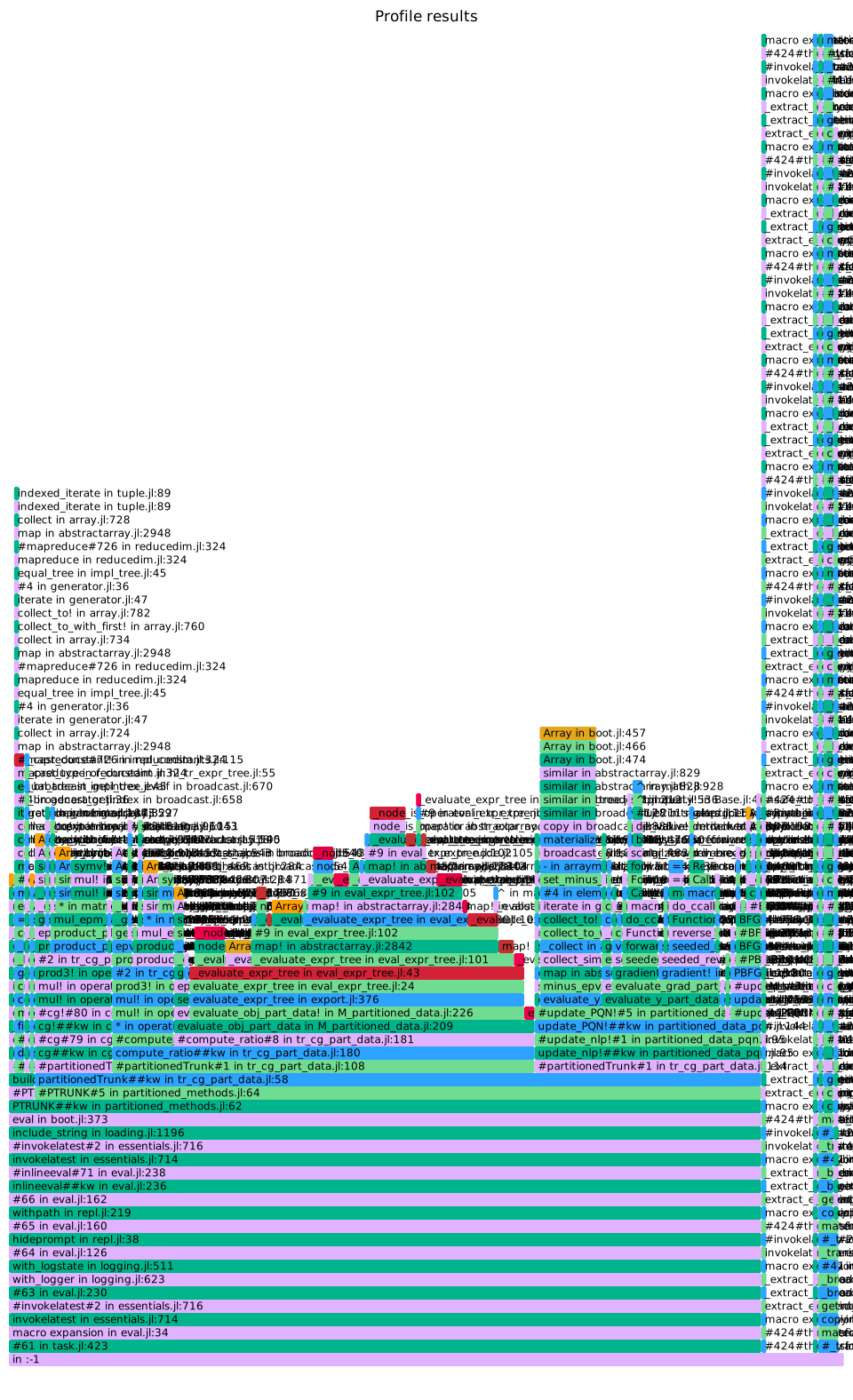
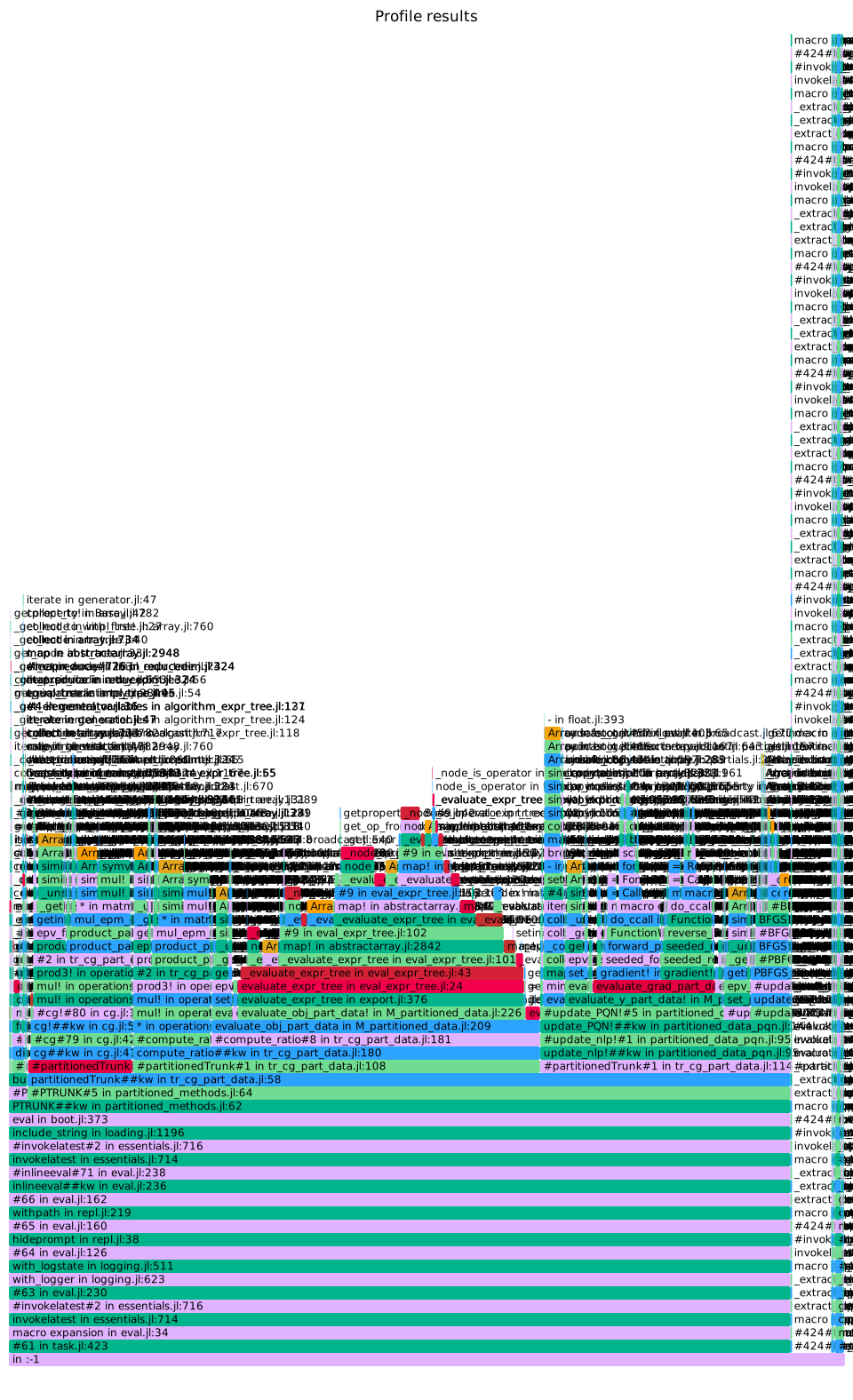
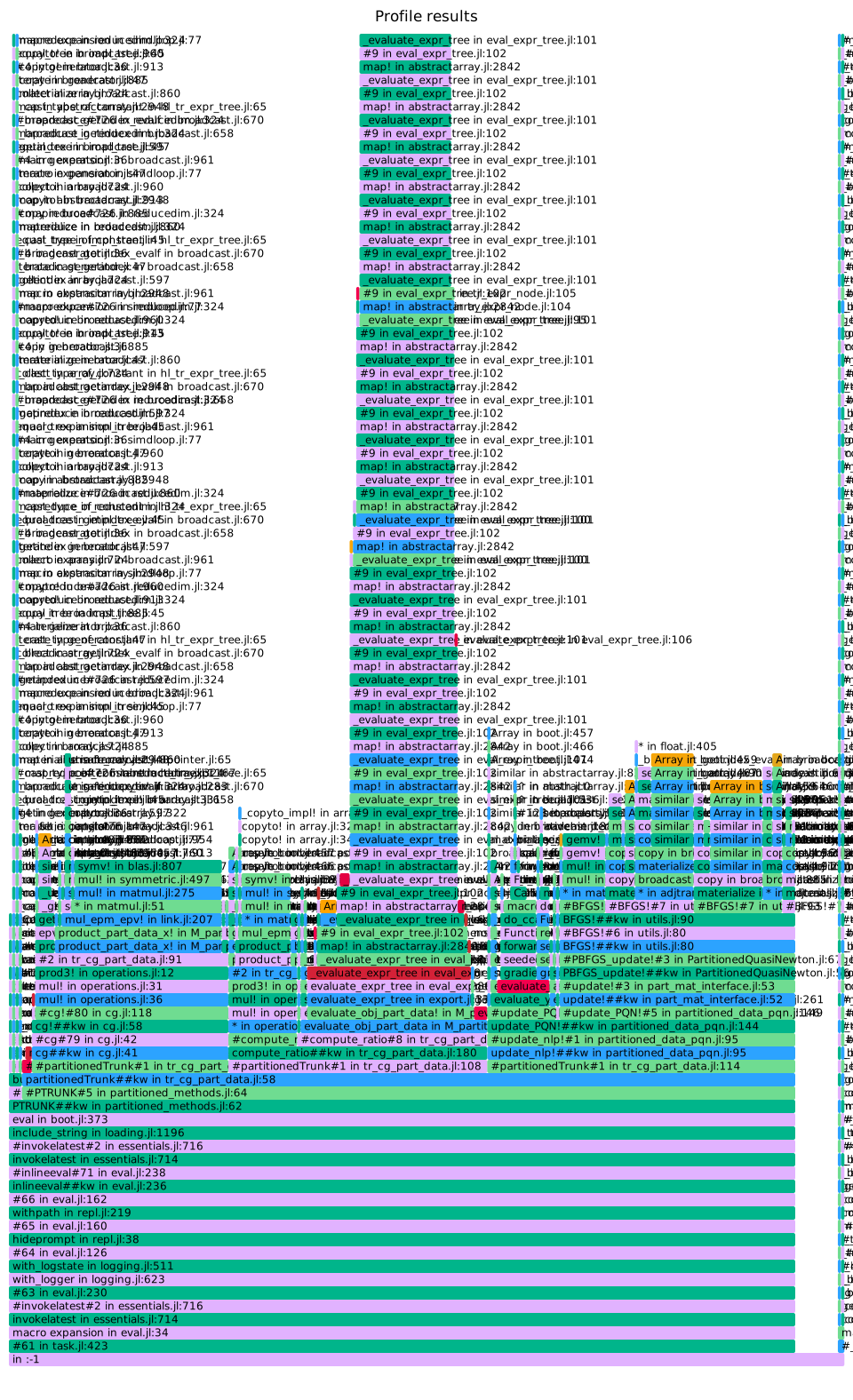
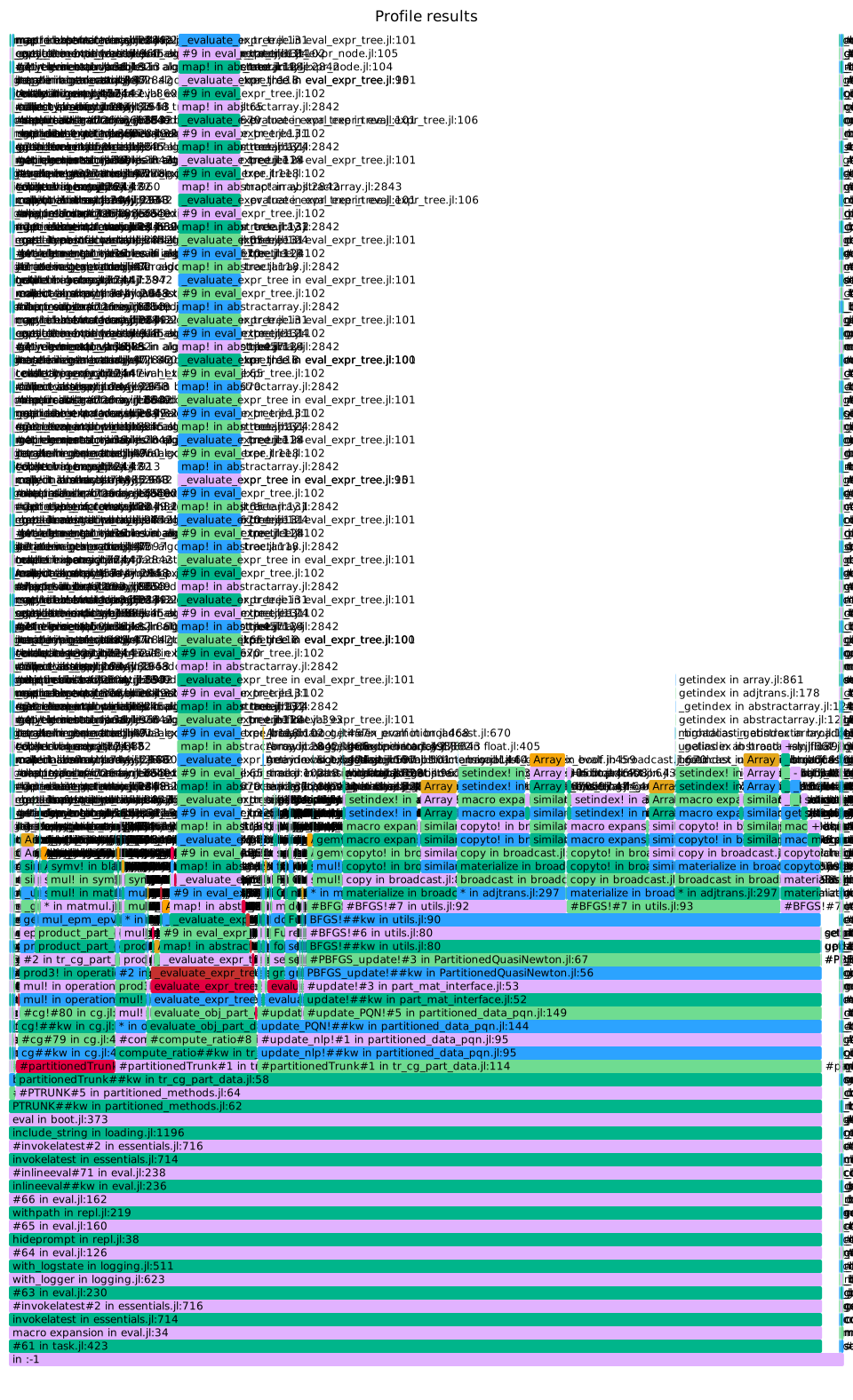
Three main cost of the PTRUNK:
cg with intensive use of partitioned vector products, 25%;- partitioned updates (limited memory of not) 25% or more;
- should preallocate vectors, at least for the numerical tests ;
- f(x) evaluation via ExpressionTreeForge 30%;
- grad evaluation 10 %.
Remark: A problem solved in few iterates may take only few cg iterates before covergence, cofonding the number of partitioned vector products performed by cg and the ones in during $m_k(s)$ evaluations.
The FlameGraphs are after the detailled script:
using PartiallySeparableSolvers, PartiallySeparableNLPModels
using BenchmarkTools, ProfileSVG
using ADNLPModels
using OptimizationProblems, OptimizationProblems.ADNLPProblems

path = pwd()*"/dvpt/profilage/profiles/"

n = 500
# nlp = ADNLPProblems.arwhead(; n)
nlp = ADNLPProblems.rosenbrock(; n)
nlp = ADNLPProblems.dixmaanh(; n)
psnlp = PartiallySeparableNLPModel(nlp)
ProfileSVG.set_default(maxdepth=100)

# Partitioned structure summary (dixmannh100):
#            element functions: ████████████████████ 297
#   distinct element functions: ██████████⋅⋅⋅⋅⋅⋅⋅⋅⋅⋅ 135
#    Element statistics:
#           linear: ⋅⋅⋅⋅⋅⋅⋅⋅⋅⋅⋅⋅⋅⋅⋅⋅⋅⋅⋅⋅ 0               convex: ███████████⋅⋅⋅⋅⋅⋅⋅⋅⋅ 100
#        quadratic: █████████████████⋅⋅⋅ 132    concave: █⋅⋅⋅⋅⋅⋅⋅⋅⋅⋅⋅⋅⋅⋅⋅⋅⋅⋅⋅ 1
#            cubic: ⋅⋅⋅⋅⋅⋅⋅⋅⋅⋅⋅⋅⋅⋅⋅⋅⋅⋅⋅⋅ 0              general: ████████████████████ 197
#          general: ████████████████████ 164
#   Element function dimensions:                         Variable overlaps:
#              min: ⋅⋅⋅⋅⋅⋅⋅⋅⋅⋅⋅⋅⋅⋅⋅⋅⋅⋅⋅⋅ 0.0                min: ████████████████⋅⋅⋅⋅ 4.0
#             mean: █████████████████⋅⋅⋅ 1.6       mean: ████████████████████ 4.9
#              max: ████████████████████ 2.0      max: ████████████████████ 5.0

# Partitioned structure summary: (rosenbrock100)
#            element functions: ████████████████████ 297
#   distinct element functions: ██████████⋅⋅⋅⋅⋅⋅⋅⋅⋅⋅ 135
#    Element statistics:
#           linear: ⋅⋅⋅⋅⋅⋅⋅⋅⋅⋅⋅⋅⋅⋅⋅⋅⋅⋅⋅⋅ 0               convex: ███████████⋅⋅⋅⋅⋅⋅⋅⋅⋅ 100
#        quadratic: █████████████████⋅⋅⋅ 132    concave: █⋅⋅⋅⋅⋅⋅⋅⋅⋅⋅⋅⋅⋅⋅⋅⋅⋅⋅⋅ 1
#            cubic: ⋅⋅⋅⋅⋅⋅⋅⋅⋅⋅⋅⋅⋅⋅⋅⋅⋅⋅⋅⋅ 0              general: ████████████████████ 197
#          general: ████████████████████ 164
#   Element function dimensions:                         Variable overlaps:
#              min: ⋅⋅⋅⋅⋅⋅⋅⋅⋅⋅⋅⋅⋅⋅⋅⋅⋅⋅⋅⋅ 0.0                min: ████████████████⋅⋅⋅⋅ 4.0
#             mean: █████████████████⋅⋅⋅ 1.6       mean: ████████████████████ 4.9
#              max: ████████████████████ 2.0      max: ████████████████████ 5.0

ges = PTRUNK(nlp; name=:pbfgs, verbose=0, max_iter=1000)

@code_warntype PTRUNK(nlp; name=:pbfgs, verbose=0, max_iter=1000) # type stability
@benchmark PTRUNK(nlp; name=:pbfgs, verbose=0, max_iter=1000)
p = ProfileSVG.@profview PTRUNK(nlp; name=:pbfgs, verbose=0, max_iter=1000)
ProfileSVG.save(path * "pbfgs" * nlp.meta.name * string(nlp.meta.nvar) * ".svg")
# (dixmannh100) 555 iter
# BenchmarkTools.Trial: 16 samples with 1 evaluation.
#  Range (min … max):  301.036 ms … 328.704 ms  ┊ GC (min … max): 5.20% … 8.99%
#  Time  (median):     311.552 ms               ┊ GC (median):    5.10%
#  Time  (mean ± σ):   313.714 ms ±   9.387 ms  ┊ GC (mean ± σ):  6.92% ± 2.18%
#   ▃                                           █▃
#   █▁▇▁▁▁▁▁▁▁▇▁▁▇▁▇▇▁▇▁▁▁▁▁▁▁▁▇▁▁▁▁▁▁▁▁▁▁▁▁▁▁▁▁██▁▁▁▁▁▁▁▁▁▁▇▁▁▁▇ ▁
#   301 ms           Histogram: frequency by time          329 ms <
#  Memory estimate: 188.44 MiB, allocs estimate: 3711279.

# (rosenbrock100) 1000 iter
# BenchmarkTools.Trial: 11 samples with 1 evaluation.
#  Range (min … max):  473.243 ms … 494.008 ms  ┊ GC (min … max): 8.11% … 7.94%
#  Time  (median):     482.832 ms               ┊ GC (median):    7.91%
#  Time  (mean ± σ):   482.779 ms ±   6.672 ms  ┊ GC (mean ± σ):  8.17% ± 0.69%
#   ▁   ▁      ▁  ▁         ▁   ▁    █            ▁    ▁        ▁
#   █▁▁▁█▁▁▁▁▁▁█▁▁█▁▁▁▁▁▁▁▁▁█▁▁▁█▁▁▁▁█▁▁▁▁▁▁▁▁▁▁▁▁█▁▁▁▁█▁▁▁▁▁▁▁▁█ ▁
#   473 ms           Histogram: frequency by time          494 ms <
#  Memory estimate: 405.67 MiB, allocs estimate: 3126986.

ges = PTRUNK(nlp; name=:plse, verbose=0, max_iter=1000)

@code_warntype PTRUNK(nlp; name=:pbfgs, verbose=0, max_iter=1000) # type stability
@benchmark PTRUNK(nlp; name=:plse, verbose=0, max_iter=1000)
p = ProfileSVG.@profview PTRUNK(nlp; name=:plse, verbose=0, max_iter=1000)
ProfileSVG.save(path * "plse" * nlp.meta.name * string(nlp.meta.nvar) * ".svg")
# (dixmaanh100) 25 iter
# BenchmarkTools.Trial: 87 samples with 1 evaluation.
#  Range (min … max):  52.061 ms … 76.085 ms  ┊ GC (min … max): 0.00% … 23.51%
#  Time  (median):     54.743 ms              ┊ GC (median):    0.00%
#  Time  (mean ± σ):   57.979 ms ±  7.506 ms  ┊ GC (mean ± σ):  5.64% ±  9.46%
#    ▁▁█▄▄▇▅▄
#   ▆█████████▃▁▁▁▃▅▁▁▃▁▃▁▁▁▁▁▁▁▁▁▁▁▁▁▁▁▁▁▁▁▁▁▁▁▁▁▁▃▃▅▃▅▅▁▁▅▃▅▃ ▁
#   52.1 ms         Histogram: frequency by time        75.6 ms <
#  Memory estimate: 24.72 MiB, allocs estimate: 466225.

# (rosenbrock100) 346 iter
# BenchmarkTools.Trial: 26 samples with 1 evaluation.
#  Range (min … max):  181.323 ms … 210.233 ms  ┊ GC (min … max): 0.00% … 6.92%
#  Time  (median):     199.135 ms               ┊ GC (median):    6.60%
#  Time  (mean ± σ):   197.935 ms ±   8.653 ms  ┊ GC (mean ± σ):  4.53% ± 3.29%
#                                 ▃     ▃          █
#   ▇▇▁▁▇▁▁▇▁▇▁▁▁▁▁▁▁▇▁▁▁▁▁▁▁▁▁▁▁▇█▇▇▁▁▁█▁▇▁▁▁▇▁▁▇▇█▁▁▇▇▁▇▇▁▁▁▇▁▇ ▁
#   181 ms           Histogram: frequency by time          210 ms <
#  Memory estimate: 86.98 MiB, allocs estimate: 1495942.
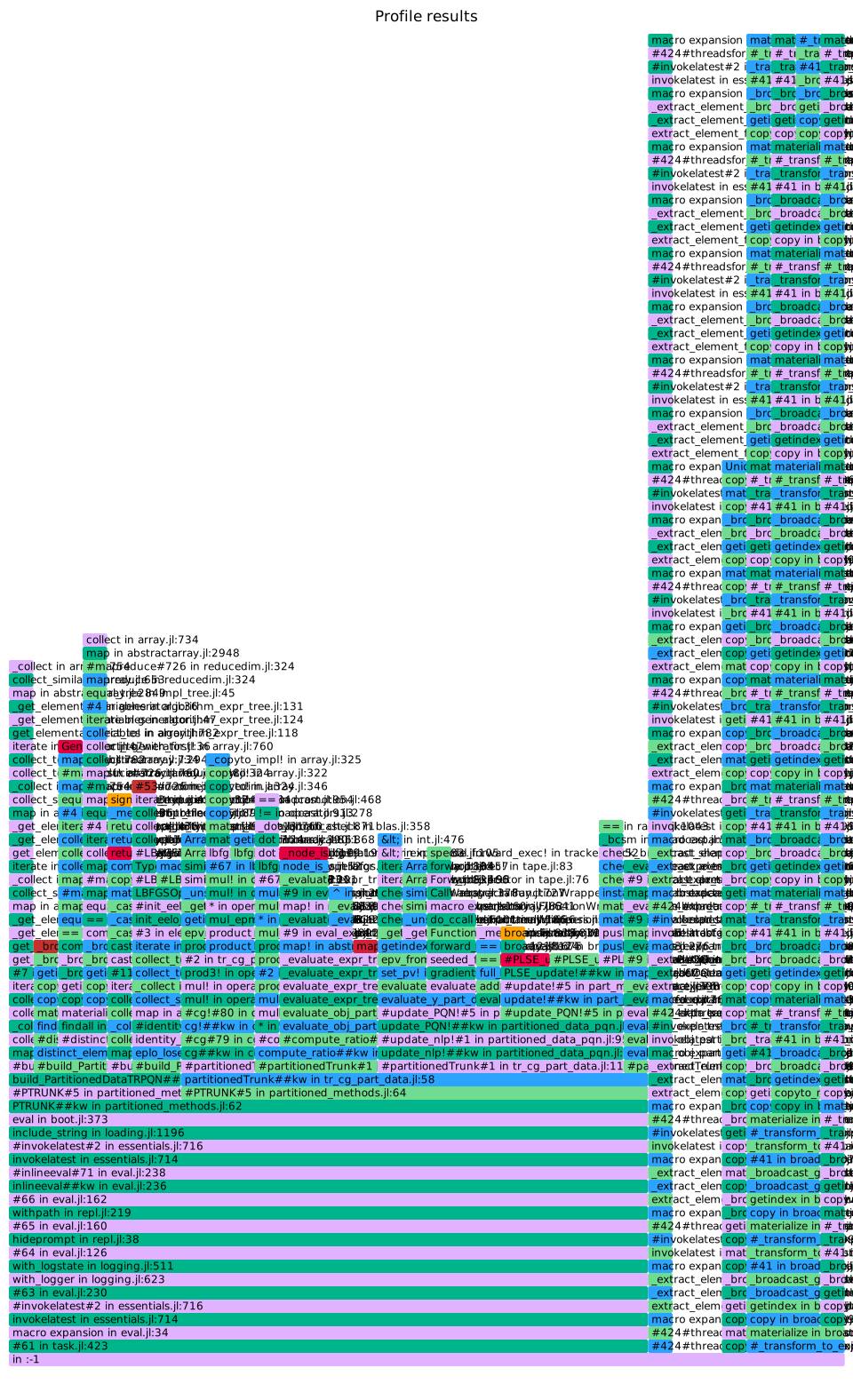
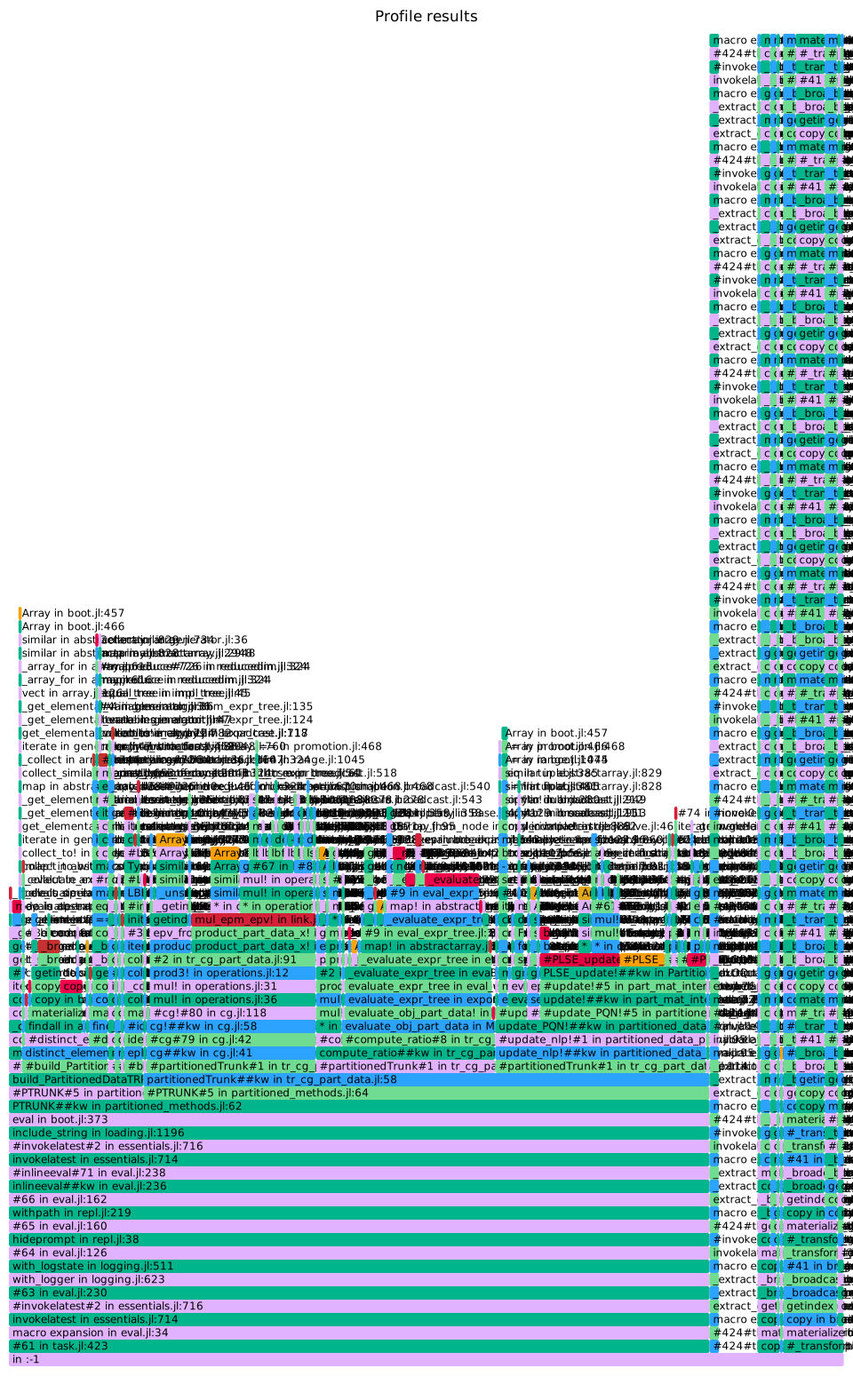
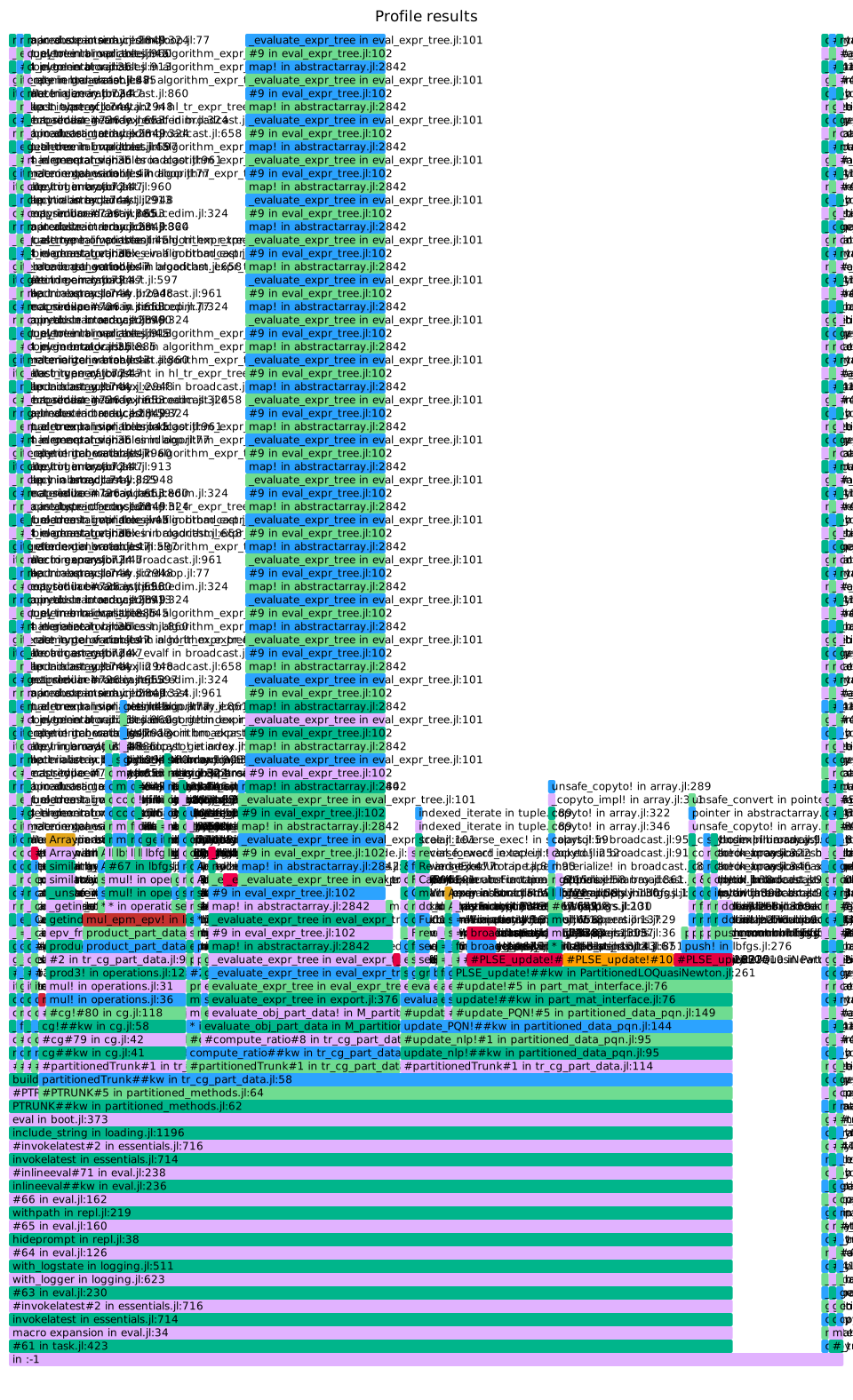
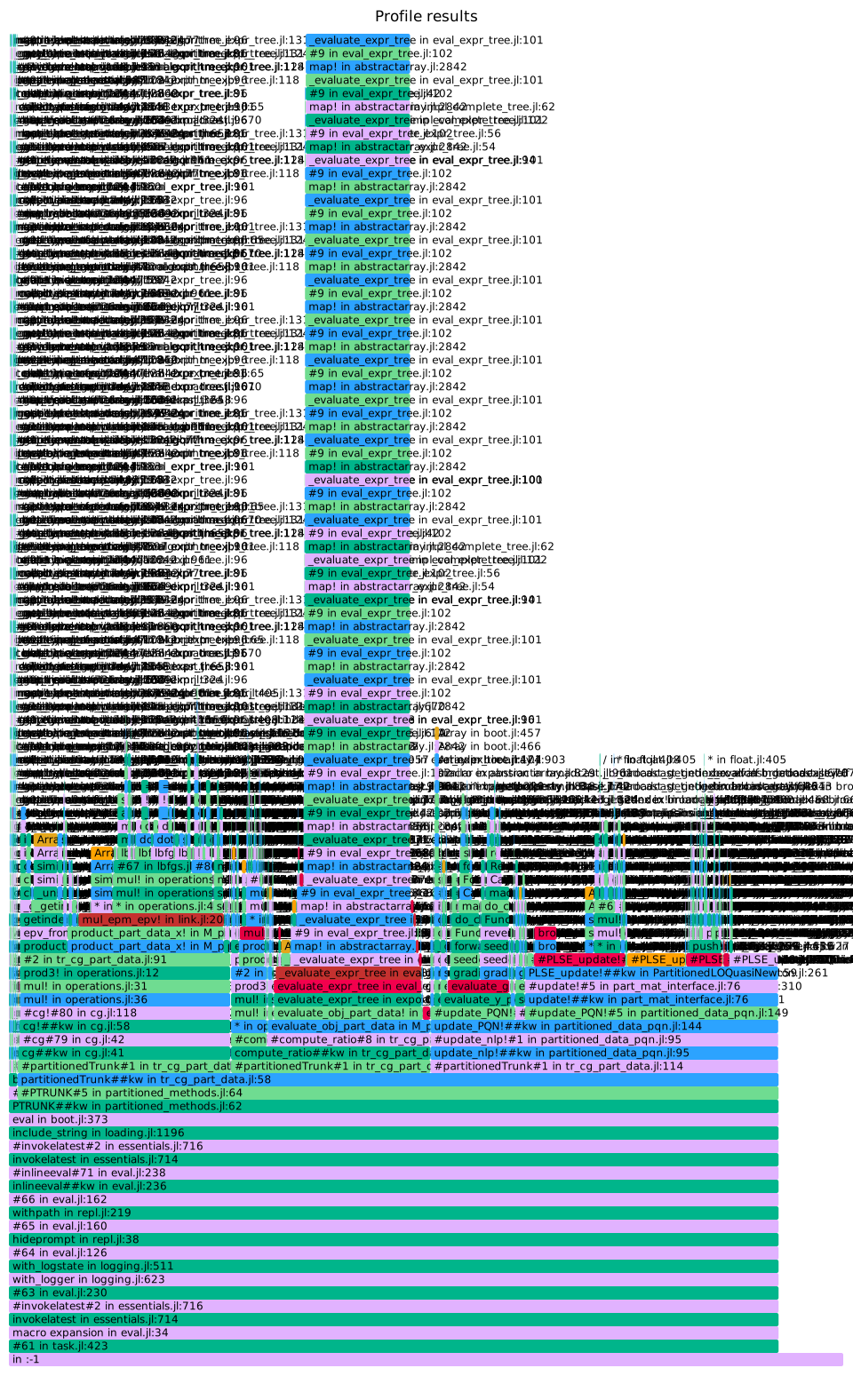
FlameGraphs:
- plse for dixmaanh99;
- plse for dixmaanh498;
- plse for genrose100;
- plse for genrose500;
- pbfgs for dixmaanh99;
- pbfgs for dixmaanh498;
- pbfgs for genrose100;
- pbfgs for genrose500;

Summary
I tried PTRUNK with both PBFGS and PLSE to get dense and linear-operator element matrices.
Three main cost of the PTRUNK:
cgwith intensive use of partitioned vector products, 25%;Remark: A problem solved in few iterates may take only few cg iterates before covergence, cofonding the number of partitioned vector products performed by$m_k(s)$ evaluations.
cgand the ones in duringThe FlameGraphs are after the detailled script:
FlameGraphs: