Hi, I am Jeon Eojin, an NLP researcher in Korea University, South Korea.
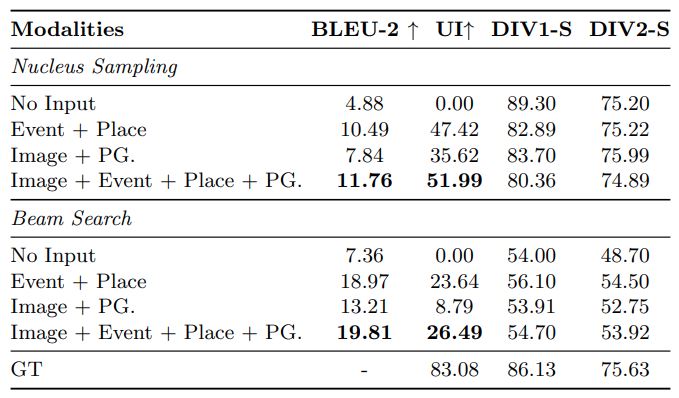
In the paper, both table 2 and table 5 contain uniqueness metrics.
However, in table 2 the metric is written as "Unique", whereas in table 5 the metric is written as "UI".
In table 2, the metric is described as "the number of inference sentences that are unique within the generated sentences divided by the total number of sentences".
In table 5, the metric is concisely described as "proportion of unique inferences".
I want to ask you if the definitions of the two metrics are the same.
Reading the paper, I guessed they are the same, but it would be great if you could check it as well.
I sincerely admire your work VisualCOMET.
Thank you.
Table 2
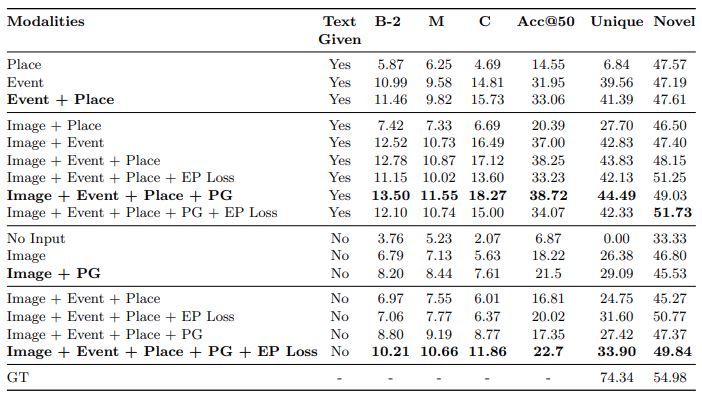
Table 5

Hi, I am Jeon Eojin, an NLP researcher in Korea University, South Korea.
In the paper, both table 2 and table 5 contain uniqueness metrics.
However, in table 2 the metric is written as "Unique", whereas in table 5 the metric is written as "UI".
In table 2, the metric is described as "the number of inference sentences that are unique within the generated sentences divided by the total number of sentences".
In table 5, the metric is concisely described as "proportion of unique inferences".
I want to ask you if the definitions of the two metrics are the same.
Reading the paper, I guessed they are the same, but it would be great if you could check it as well.
I sincerely admire your work VisualCOMET.
Thank you.
Table 2

Table 5
