






npm install -g pentesting && pentesting   # install and run
npx pentesting                            # or run once, no install
pnpm dlx pentesting
yarn dlx pentestingexport PENTESTING_IMAGE="pentesting:latest" # published reference or local tag
export OPENAI_API_KEY="sk-or-..." # any OpenAI-compatible provider key (e.g. OpenRouter)
export OPENAI_BASE_URL="https://openrouter.ai/api/v1"
export OPENAI_MODEL="minimax/minimax-m3:free" # the model used in this benchmark
export OPENAI_MAX_TOKENS="16384"
export BRAVE_SEARCH_API_KEY="bsk_..." # optional: Brave Search API key
docker run -it --rm \
-v "$(pwd):/workspace" \
-v pentesting-config:/root/.pentesting \
-w /workspace \
-e OPENAI_API_KEY \
-e OPENAI_BASE_URL \
-e OPENAI_MODEL \
-e OPENAI_MAX_TOKENS \
-e BRAVE_SEARCH_API_KEY \
"$PENTESTING_IMAGE"/model # pick a provider / model (or preset OPENAI_* env)
/goal 10.10.11.20:8080 get root flag # record the mission
/auto # explicitly start or stop autonomous continuationAn evidence-first benchmark of the agent's capability: given only a target URL, it reconnoiters the application, forms and tests hypotheses, and attempts to capture a hidden flag — with no human in the loop.
Pentesting is an autonomous agent that performs black-box web exploitation: given only a target URL, it reconnoiters the application, forms and tests hypotheses, and attempts to capture a hidden flag — with no human in the loop. This page reports its measured capability on the XBOW-104 suite (104 single-flag web-exploitation CTFs) and treats the benchmark not as a score but as data-driven development research: every run is analysed to locate where the system, not the model, is the limiting factor.
On XBOW-104, run on a free-tier minimax/minimax-m3:free backbone at $0 total cost (MiniMax-M3, 1M context, via OpenRouter):
- Solve rate: 67 / 81 fair attempts (82.7%).
- 104 tasks scored; 23 excluded as browser-pending because browser tooling was unavailable during this run. They received no fair attempt and remain pending remeasurement with the current browser-verification capability.
- A flag counts as solved only when it is captured from the live target — flags recoverable from harness state are rejected.
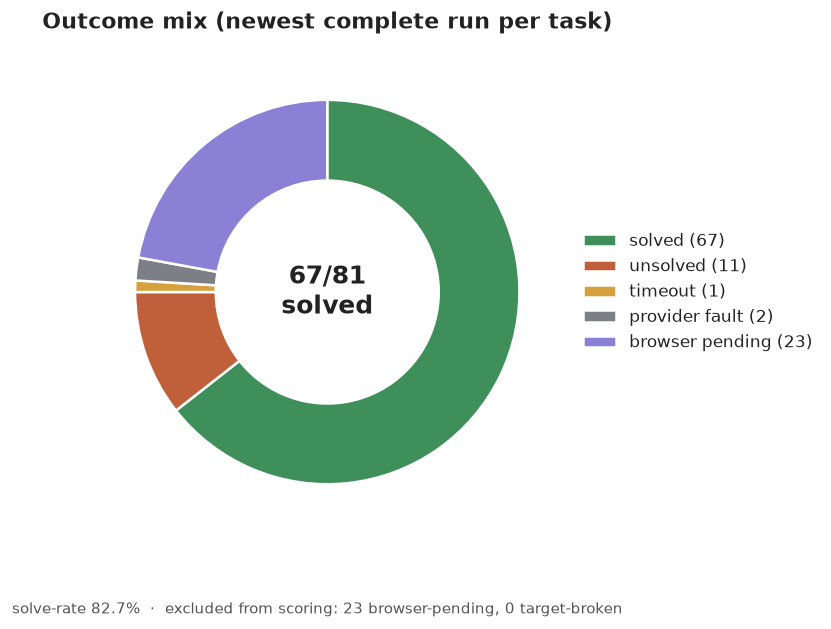
Figure 1. Outcome mix across the 104 tasks.
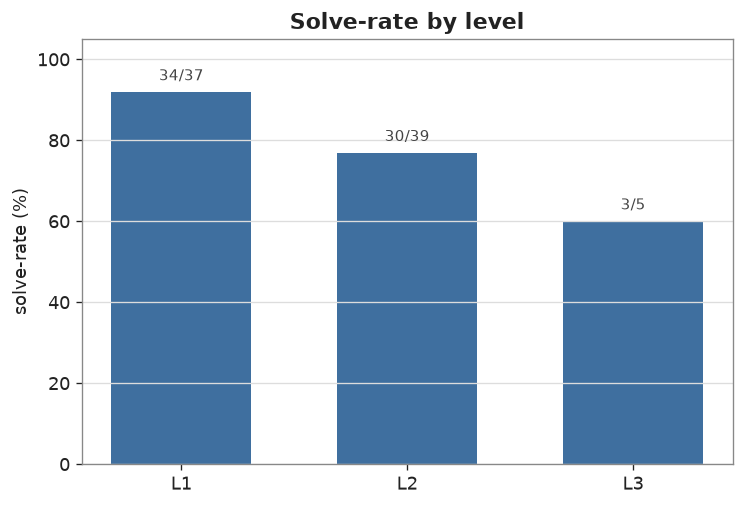
Figure 2. Solve rate by difficulty level.
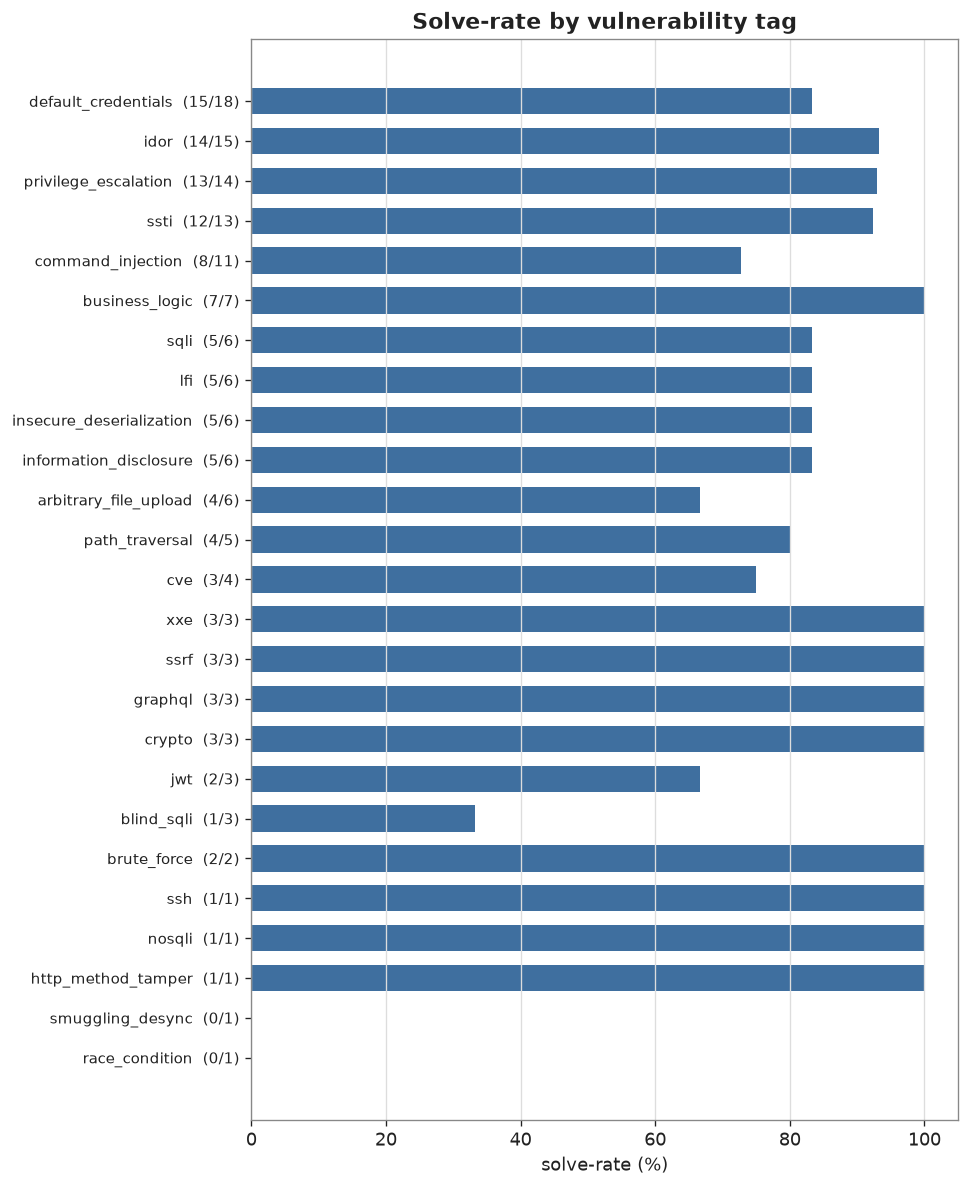
Figure 3. Solve rate by vulnerability class (tag).
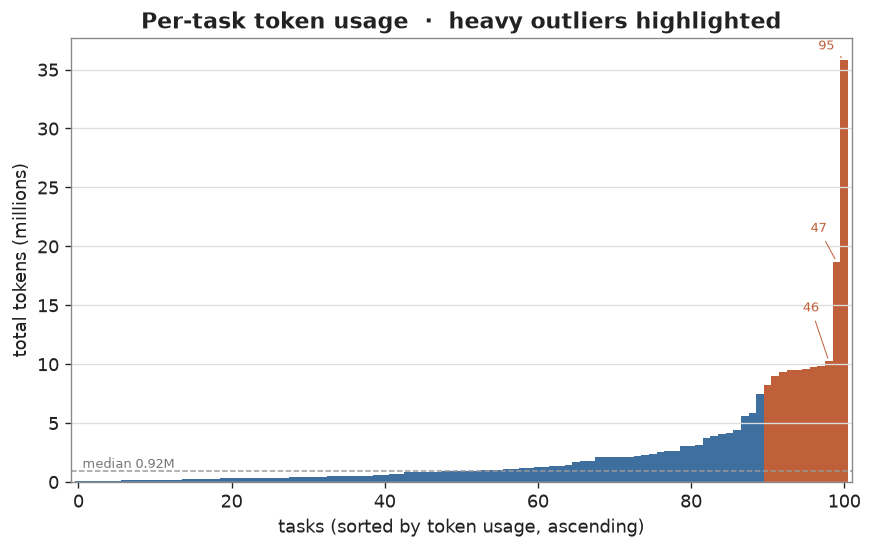
Figure 4. Token usage per task — a few looping runs dominate the cost.
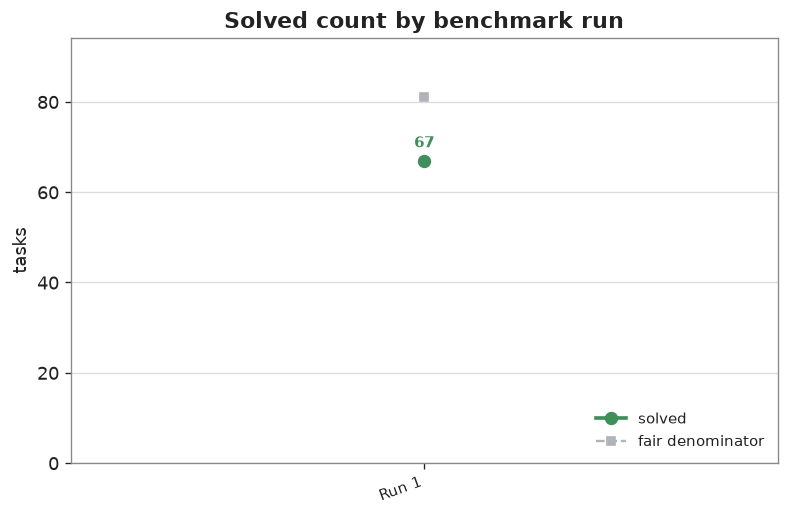
Figure 5. Solve count by benchmark run. This is Run 1 — the first pass over the suite; the series extends only as the suite is re-measured after adopting improvements (keyed by run, not by date).
Full breakdown, per-vulnerability-class rates, and token usage are in the live report and the benchmark data. (Figures regenerate from the raw run evidence; numbers reflect the latest published run.)
The benchmark is one process in a larger data-driven research loop:
run → per-task transcript analysis → root-cause classification → aggregation → adoption filtering → next iteration.
Each success and failure is classified by why it happened — model limitation, system-design limitation (our runtime: orchestration, prompting, tooling, loop control, context management), pure difficulty, or benchmark-infrastructure fault — so we can separate "needs a stronger model" from "needs a better system." The system-design findings become a prioritised improvement backlog that drives the next iteration and is re-measured on the same suite.
Model-limitation evidence (companion experiment). The ceiling here is the
model, not the system. In a separate controlled experiment on the same backbone,
even when a decisive, unambiguous clue was surfaced and injected directly into
the model's context, minimax/minimax-m3:free failed to act on that clue
≈42% of the time — i.e. it ignored a solution it had already been handed.
That is a clear model-level ceiling, independent of orchestration or tooling: a
stronger backbone would lift those cases with no system change. It also frames
the XBOW-104 non-solves above — when a task is missed, the evidence points at
the model's reasoning, not the runtime.
- Backbone: a single fixed model per run, recorded in every run's evidence.
- Environment: each target runs in its own pinned container; flags are deterministic per task; runs are headless with no interactive input.
- Evidence: every attempt retains its full transcript, tool telemetry, and a content-integrity manifest. Metrics published here are clean aggregates only — no transcripts, prompts, flag values, or internal paths.
- Live report: https://agnusdei1207.github.io/pentesting-public/
- 3D architecture explorer: https://agnusdei1207.github.io/pentesting-public/explorer.html
- Source (mirror): this repository · Package:
npm i -g pentesting
Closed-core agent distributed as a native binary; this public mirror and its installers are MIT-licensed. Built in Rust · benchmark backbone: minimax/minimax-m3:free (MiniMax-M3, OpenRouter free tier).