The most efficient, reliable, and developer-friendly way to use the Google Local Services API.
Actor page: apify.com/johnvc/google-local-services-api Input schema: apify.com/johnvc/google-local-services-api/input-schema
This API returns Google Local Services Ads: the vetted home-service businesses that carry the Google Guaranteed or Google Screened badge and appear above the map pack. For any service in any US city, you get structured rows with the business name, badge, rating, review count, phone number, service area, years in business, and stable IDs. It is built for home-services lead generation, local SEO and LSA monitoring, and competitor tracking.
- Python 3.11 or higher
- An Apify account and API key (get a free key here)
-
Clone the repository
git clone https://github.com/johnisanerd/Apify-GoogleLocalServices-API.git cd Apify-GoogleLocalServices-API -
Install dependencies with UV
# Install UV if you do not have it:
curl -LsSf https://astral.sh/uv/install.sh | sh

# Install project dependencies:
uv sync
-
Configure your API key
cp .env.example .env
# Edit .env and add your Apify API key
# Get your free API key at: https://apify.com?fpr=9n7kx3
-
Run the example
uv run python google-local-services-api-example.py
export APIFY_API_TOKEN="your_api_key_here"
uv run python google-local-services-api-example.pyHome-services lead generation without the ad spend: read the same vetted-provider list Google shows searchers, then work it however you like.
Local SEO and LSA monitoring: track which businesses hold the top Local Services slots for your clients' keywords, week over week.
Competitor tracking: watch a rival's rating, review velocity, and badge status across the cities they serve.
Agency prospecting: find home-service businesses that do not yet hold a badge by diffing against your directory.
- Every Google Guaranteed and Google Screened business for a service and US city
- Business name, business type, service area, and years in business
- Star rating and total review count for reputation scoring
- Phone number in international format for direct outreach
- Stable business IDs (cid, bid, pid) plus the place dataCid for repeat runs
- Reads the Local Services Ads listing itself, not the organic map pack
- googleGuaranteed and googleScreened returned as clean booleans, plus the raw badge text
- A one-line human-readable summary on every row, built for AI agents
- US-only coverage across about 110 supported service types
{
  "queries": ["hvac"],
  "location": "Phoenix, AZ",
  "maxResultsPerQuery": 5
}{
"queries": ["plumber", "electrician"],
"location": "Austin, TX",
"language": "en",
"maxResultsPerQuery": 20
}| Parameter | Type | Required | Default | Description |
|---|---|---|---|---|
queries |
list[str] |
YES* | - | The service(s) to search, for example "plumber" or "hvac". About 110 service types are supported; plurals are normalized. |
query |
str |
YES* | - | A single service, as an alternative to queries. At least one of query or queries is required. |
location |
str |
YES** | - | A US city or district, for example "Austin, TX". Resolved internally to a Google place. Required unless you pass dataCid. |
dataCid |
str |
no | - | Advanced: the decimal Google place CID. Pass it to skip location resolution (and its fee). |
jobType |
str |
no | - | Optional service subcategory, for example restore_power for electricians. |
language |
str |
no | en |
Two-letter language code. |
maxResultsPerQuery |
int |
no | - | Optional cap per query. A listing typically returns up to about 20 businesses. |
*At least one of query or queries is required. **location is required unless you pass dataCid. Google serves Local Services Ads for US locations only.
{
  "result_type": "local_services_ad",
  "query": "hvac",
  "location": "Phoenix, AZ",
  "dataCid": "6745062158417646970",
  "businessName": "Day & Night Air Conditioning, Heating & Plumbing",
  "badge": "GOOGLE GUARANTEED",
  "googleGuaranteed": true,
  "googleScreened": false,
  "rating": 4.9,
  "reviews": 9642,
  "phone": "+16025551234",
  "businessType": "HVAC Pro",
  "serviceArea": "Phoenix",
  "yearsInBusiness": 15,
  "hours": { "monday": "Open 24 hours" },
  "profileLink": "https://www.google.com/localservices/profile?...",
  "cid": "236554922",
  "bid": "2506154605",
  "pid": "2507194595",
  "summary": "Day & Night Air Conditioning, Heating & Plumbing - HVAC Pro - serving Phoenix - 4.9 stars (9642 reviews)",
  "fetched_at": "2026-07-10T21:39:00+00:00"
}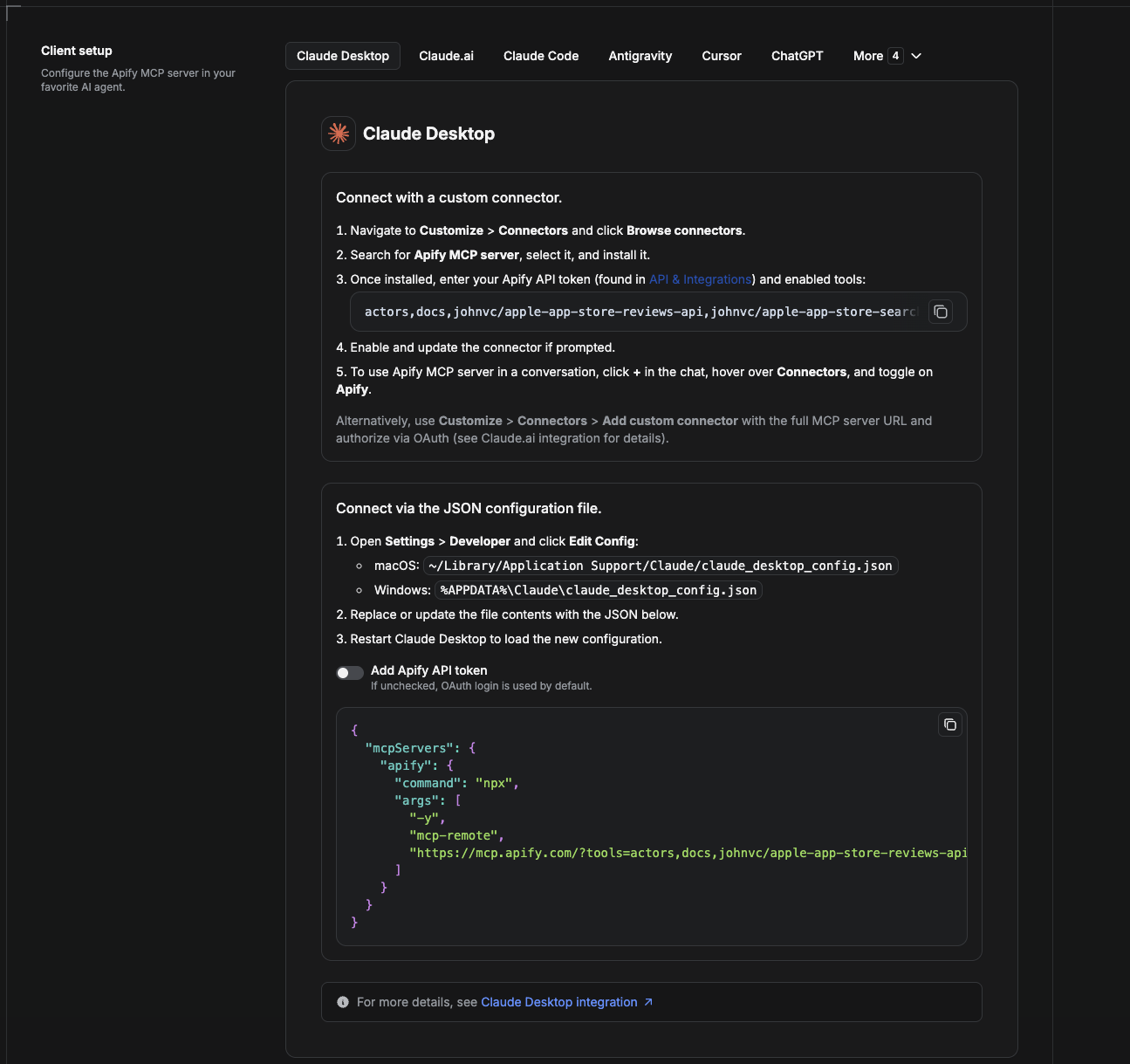
Cowork is the desktop app's automation mode. To give it the Google Local Services API as a tool, add the Apify MCP server as a connector.
- Open the Claude desktop app and go to Settings > Connectors (or Settings > Developer > Edit Config to edit
claude_desktop_config.jsondirectly).- macOS:
~/Library/Application Support/Claude/claude_desktop_config.json - Windows:
%APPDATA%\Claude\claude_desktop_config.json
- macOS:
- Add the Apify MCP server, preloaded with only this Actor:
{
  "mcpServers": {
    "apify": {
      "command": "npx",
      "args": [
        "-y",
        "mcp-remote",
        "https://mcp.apify.com/?tools=actors,docs,johnvc/google-local-services-api"
      ]
    }
  }
}- Restart the app. When Cowork first calls the tool, complete the OAuth prompt in your browser, or add your Apify API token in the connector settings to skip OAuth.
- In a Cowork chat, confirm the tool is available and ask it to run the Google Local Services API.
Download the desktop app and start a free trial: https://claude.ai/referral/uIlpa7nPLg More help: https://docs.apify.com/platform/integrations/claude-desktop
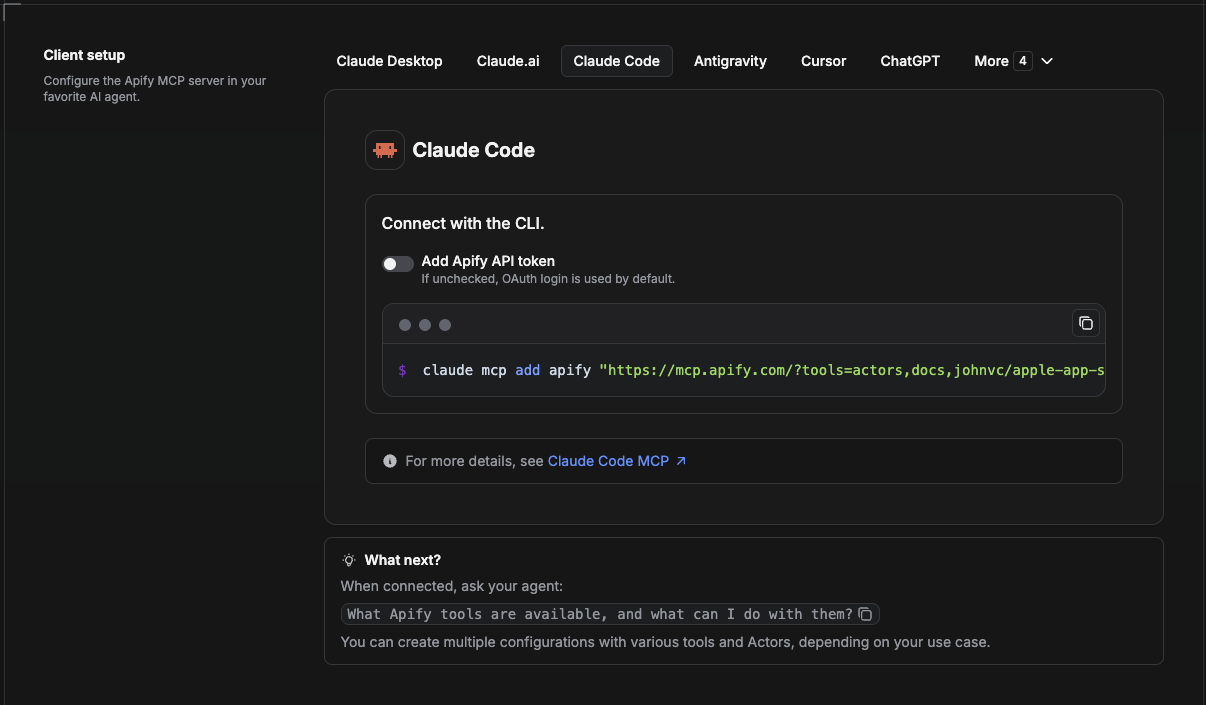
Claude Code is the command-line tool. Add the Actor's MCP server with one command:
claude mcp add --transport http apify \
  "https://mcp.apify.com/?tools=actors,docs,johnvc/google-local-services-api"
To use a token instead of browser OAuth:
claude mcp add --transport http apify \
  "https://mcp.apify.com/?tools=actors,docs,johnvc/google-local-services-api" \
  --header "Authorization: Bearer YOUR_APIFY_TOKEN"
Then verify with claude mcp list, or run /mcp inside a session. Ask Claude Code to call the Google Local Services API.
Try Claude Code free: https://claude.ai/referral/uIlpa7nPLg Claude Code MCP docs: https://code.claude.com/docs/en/mcp
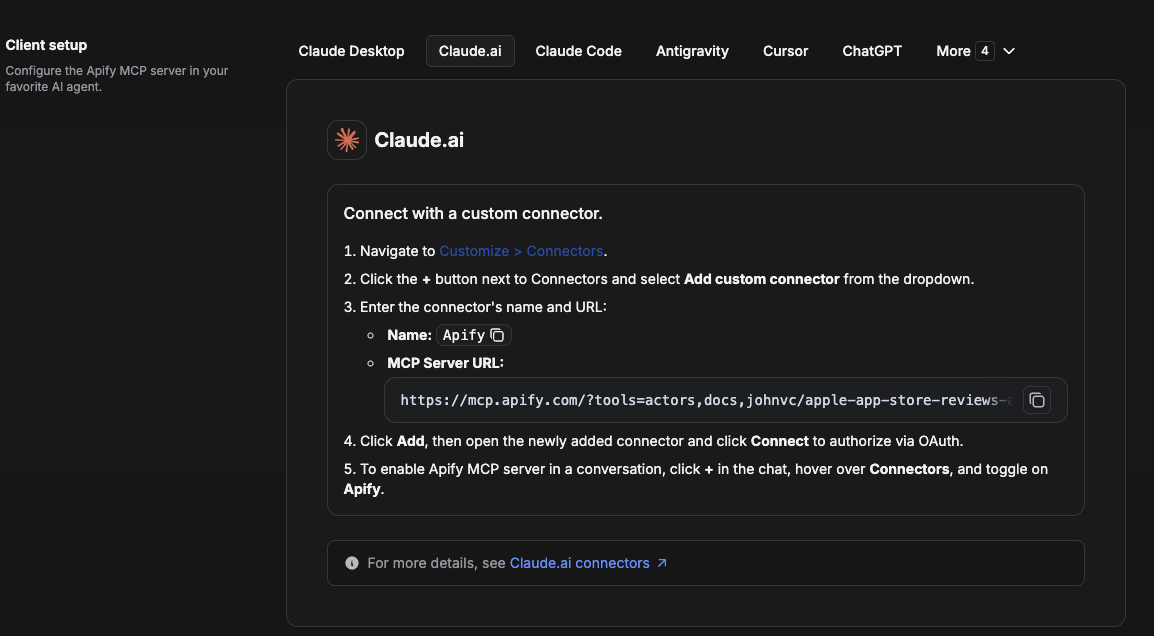
On claude.ai you add Apify as a connector, then enable just this Actor's tool.
- Go to Settings > Connectors > Browse connectors and search for Apify MCP server. Install it (enable or update if prompted).
- When connecting, authenticate with your Apify API token, and enable the tool
johnvc/google-local-services-api. - In any chat, open + > Connectors and turn on Apify.
- Alternatively, choose Add custom connector and paste the full MCP URL
https://mcp.apify.com/?tools=actors,docs,johnvc/google-local-services-api, using OAuth when prompted. - Ask Claude to run the Google Local Services API.
Open Claude on the web: https://claude.ai/referral/uIlpa7nPLg
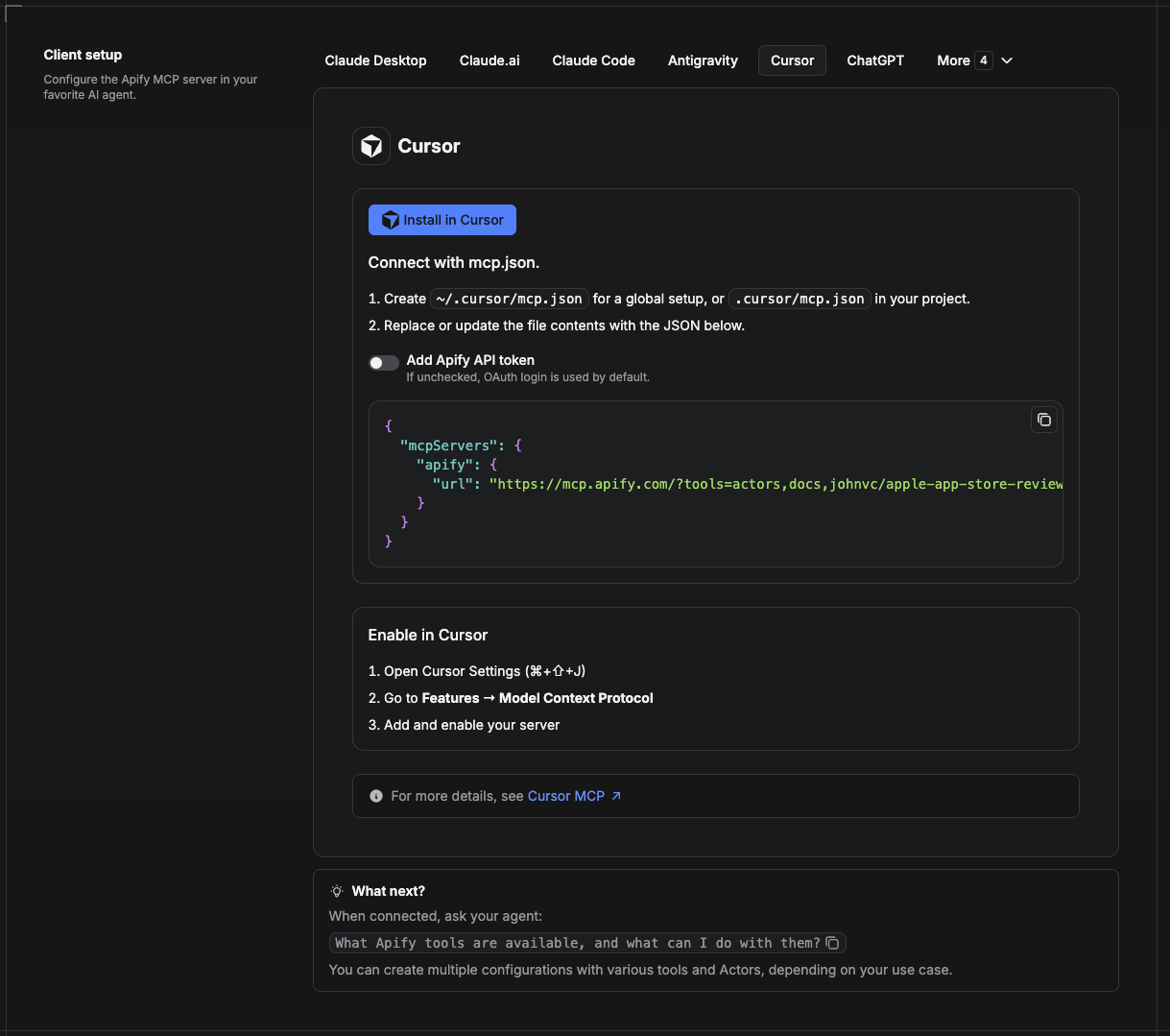
Cursor reads MCP servers from a project file at .cursor/mcp.json.
- In your project, create
.cursor/mcp.json:
{
  "mcpServers": {
    "apify": {
      "url": "https://mcp.apify.com/?tools=actors,docs,johnvc/google-local-services-api"
    }
  }
}- If you prefer token auth over browser OAuth, add a header:
{
  "mcpServers": {
    "apify": {
      "url": "https://mcp.apify.com/?tools=actors,docs,johnvc/google-local-services-api",
      "headers": { "Authorization": "Bearer YOUR_APIFY_TOKEN" }
    }
  }
}- Open Cursor > Settings > MCP and confirm the apify server is connected (green dot).
- In Composer or Chat, ask Cursor to call the Google Local Services API.
New to Cursor? Get it here: https://cursor.com/referral?code=XQP4VBLI3NNX
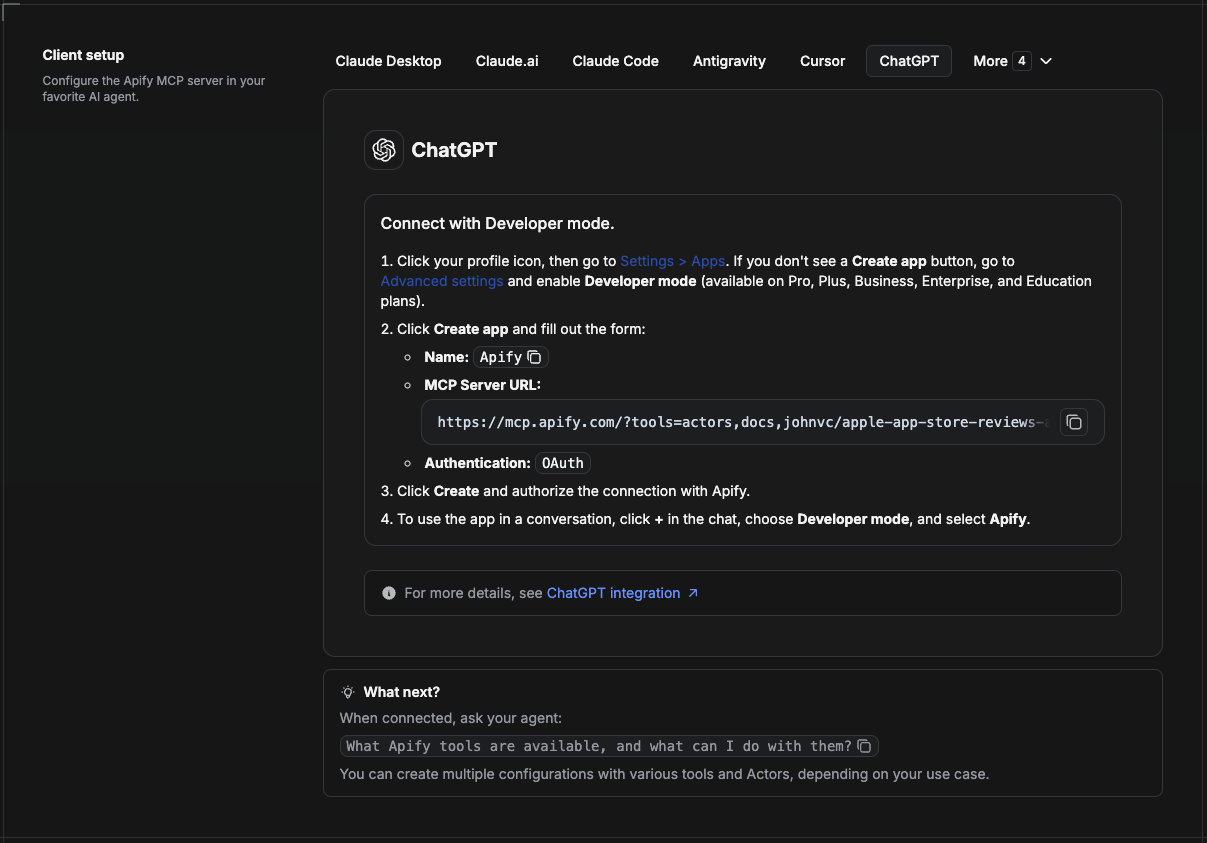
ChatGPT connects to the Apify MCP server through Developer mode (available on ChatGPT Pro, Plus, Business, Enterprise, and Education plans).
- Click your profile icon, then go to Settings > Apps. If you do not see a Create app button, open Advanced settings and enable Developer mode.
- Click Create app and fill out the form:
- Name: Apify
- MCP Server URL:
https://mcp.apify.com/?tools=actors,docs,johnvc/google-local-services-api - Authentication: OAuth
- Click Create and authorize the connection with Apify.
- To use the app in a conversation, click + in the chat, choose Developer mode, and select Apify.
More help: https://docs.apify.com/platform/integrations/mcp
Prefer n8n? This API is also available as a community node, n8n-nodes-google-local-services-api. In n8n, go to Settings > Community Nodes, install n8n-nodes-google-local-services-api, then use it in any workflow. It also works as an AI Agent tool.
Use the Google Local Services API to power your data workflows with reliable, structured results.
Last Updated: 2026.09.09