Image recognition refers to technologies that identify places, logos, people, objects, buildings, and several other variables in digital images. It may be very easy for humans like you and me to recognise different images, such as images of animals. We can easily recognise the image of a cat and differentiate it from an image of a horse. But it may not be so simple for a computer. A digital image is an image composed of picture elements, also known as pixels, each with finite, discrete quantities of numeric representation for its intensity or grey level. So the computer sees an image as numerical values of these pixels and in order to recognise a certain image, it has to recognise the patterns and regularities in this numerical data. How does Image recognition work? Typically the task of image recognition involves the creation of a neural network that processes the individual pixels of an image. These networks are fed with as many pre-labelled images as we can, in order to “teach” them how to recognize similar images.
Using pertained model Resnet50 for Image recognition ResNet-50 is a convolutional neural network that is 50 layers deep. load a pretrained version of the network trained on more than a million images from the ImageNet database . The pretrained network can classify images into 1000 object categories, such as keyboard, mouse, pencil, and many animals.
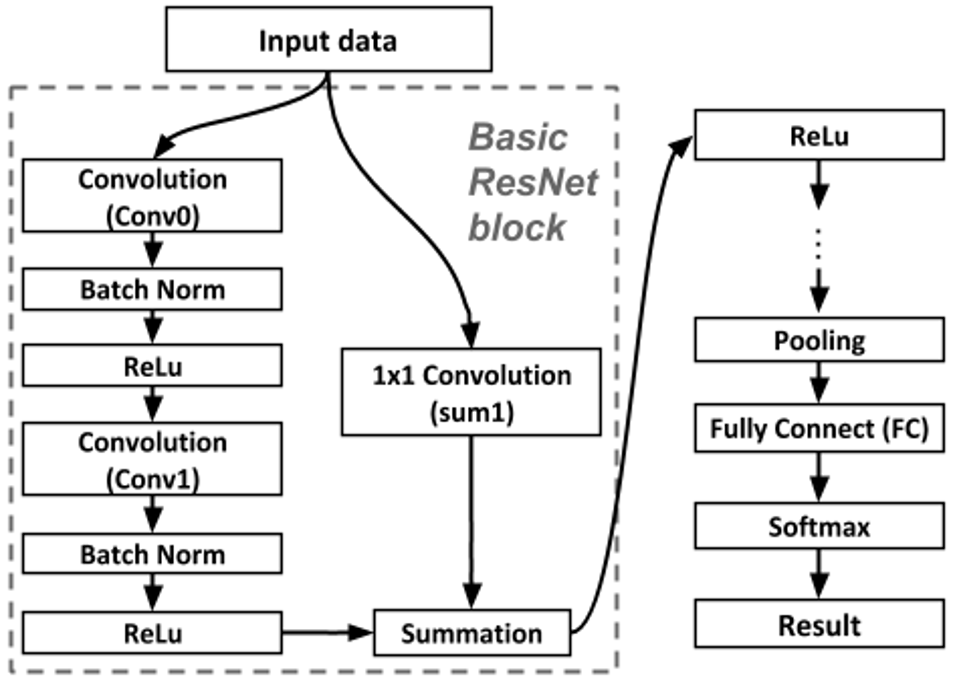
Resnet50 architecture:
All in Docx