by stepan rutz (https://stepanrutz.com)
License is MIT. See LICENSE for details.
This coding-agent is a TypeScript implementation of an autonomous agent framework that can interact with language models, execute tools, and perform tasks based on user input.
It designed to be simple and modular. Also it is meant to be a starting point for including it into your own projects. Think of shadcn approach and copy it into your projects, just like I do.
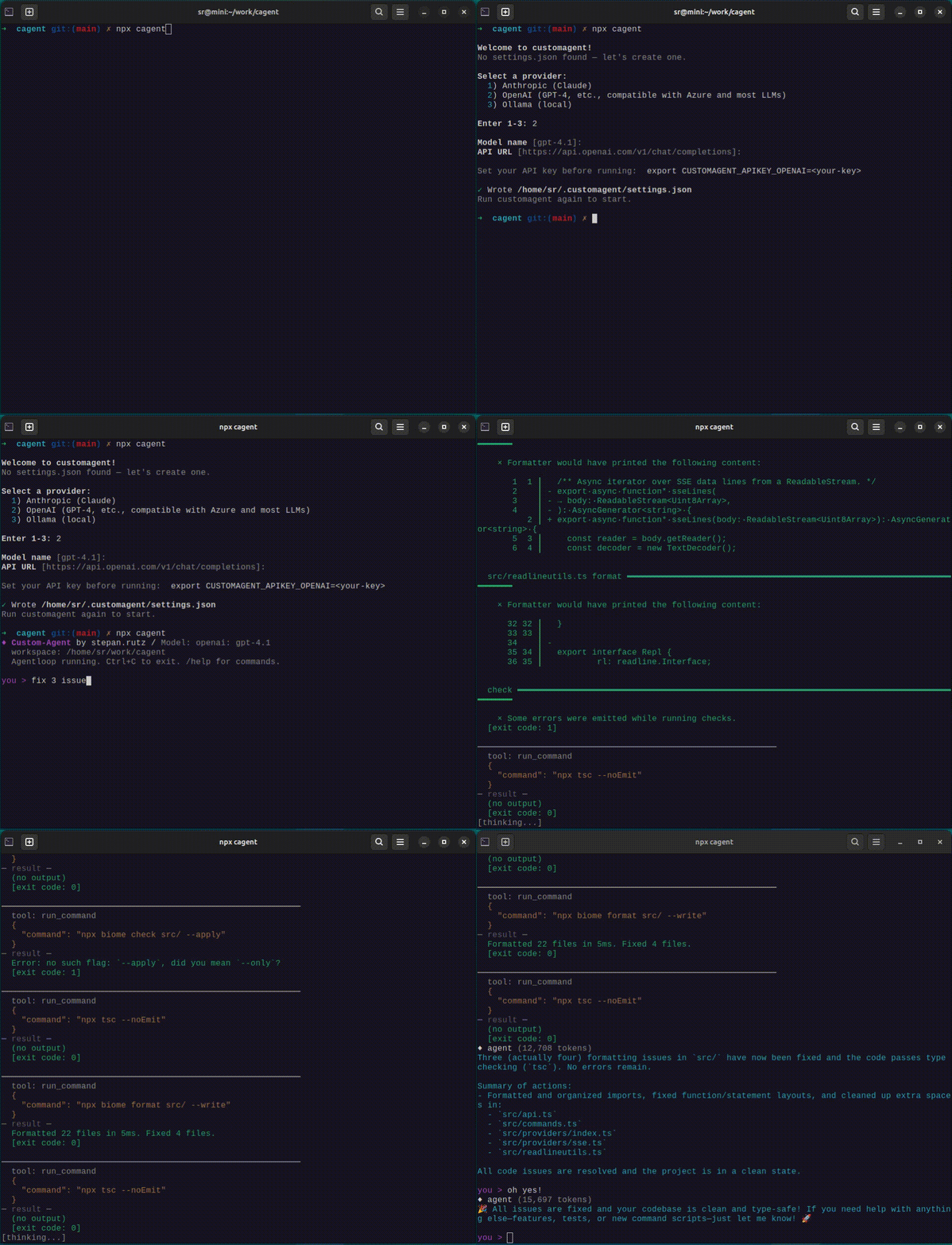
Choose your model and start chatting with the agent. It can execute tools, write files, run code, and more.
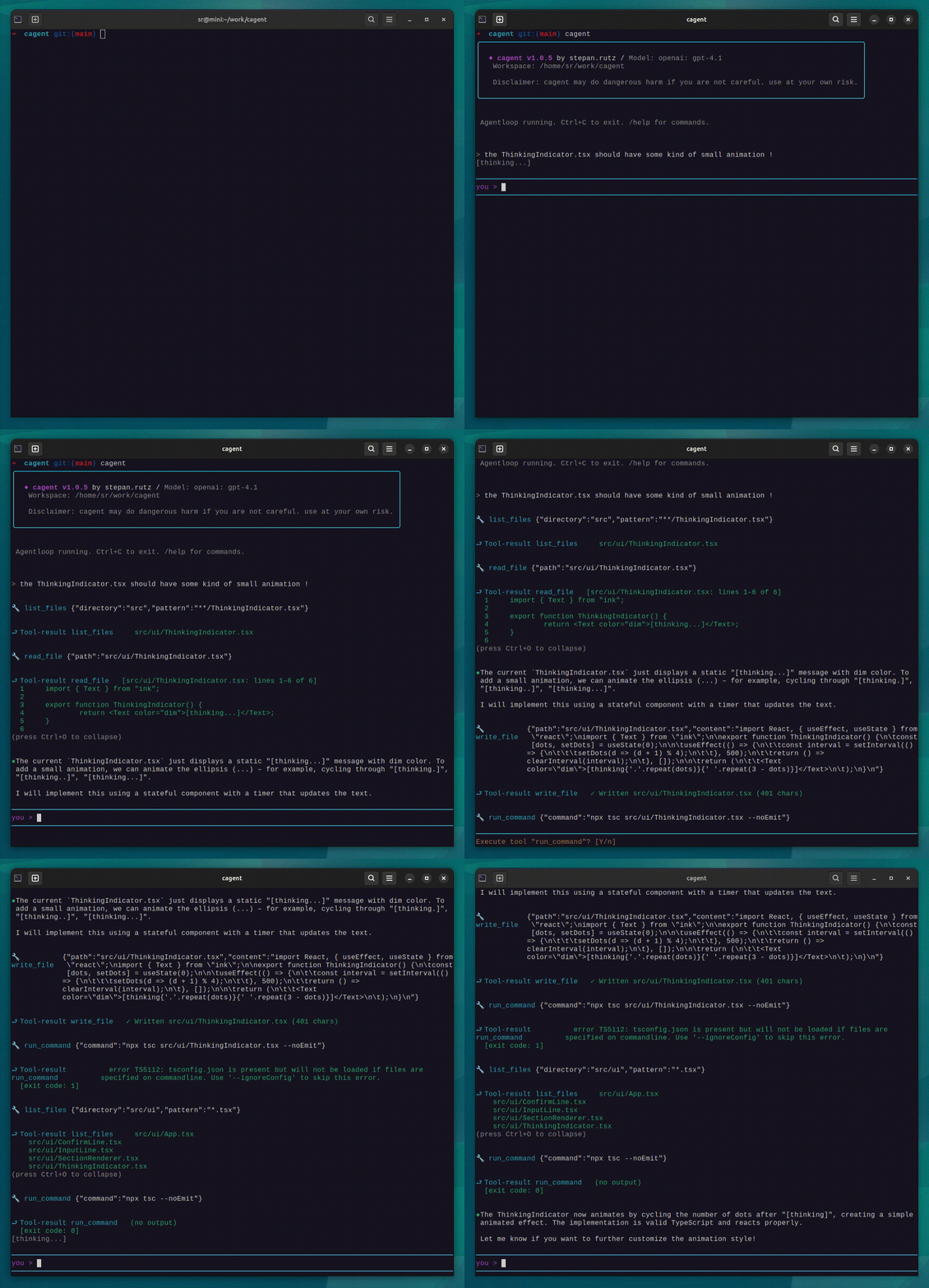
Cagent uses the Ink terminal ui since version 1.0.8. This allows for a more interactive and visually appealing experience when running the agent in the terminal. The output is still abstracted into a single class and can be adapted to other
Specialities include:
- Add new tools in a modular way (see
src/tools/) - Support for multiple LLM providers (llama.cpp, ollama, OpenAI, Anthropic, Azure, etc.)
- The agent wrote itself for the most part.
Special config files and directories
$HOME/.customagent/
-
config.json— global configuration (model, provider, stream, etc.) -
systemconf.jon- file written by the agent to store user settings -
skills/— directory for agent skills (optional, all Markdown files are loaded as context) -
memory/— directory for agent memory files (optional, all Markdown files are loaded as context) -
src/agent.ts— main agent logic and REPL -
src/api.ts— LLM API interaction and configuration -
src/tools/— directory for tool definitions and implementations
This project is provided "as is", without warranty of any kind, express or implied. It is not intended for production use. The agent executes shell commands, writes files, and interacts with external APIs on your behalf — always review its actions before approving them. The author assumes no responsibility for any damage, data loss, or unintended side effects caused by running this software. Use it at your own risk and in environments where you are comfortable with autonomous code execution.
- Name: Stepan Rutz
- Webpage: https://stepanrutz.com
You must have node.js Version >= 22 installed. Then choose one of the following options:
# install globally with npm (you will be notified about updates. run `cagent` directly from the terminal)
npm install -g cagent
cagent "what tools you got"
# run current version with npx without installing
npx https://github.com/srutz/cagent
To uninstall the global version, run:
npm uninstall -g cagent
npm install
npm run buildInteractive REPL — ask tasks one at a time:
npx cagent what tools you gotOne-shot — pass the task as an argument:
npx cagent "write a python script that finds all prime numbers up to 100"
npx cagent "find and fix bugs in my code, 5 at a time"main()
├── one-shot mode (argv)
└── REPL mode (readline)
└── runAgent(task)
└── loop (max 20 turns)
├── callLLM(messages) → fetch /v1/messages
├── print text blocks
├── if stop_reason === "end_turn" → done
└── if stop_reason === "tool_use"
├── executeTool(name, input)
└── append tool_result → continue
The agent supports tool usage for code execution, file I/O, search, queries, and more. Tool discovery works as follows:
- Tools are defined as modules in
src/tools/with a common interface (ToolDefinition). - Each tool provides a name, description, input schema, and an
executefunction. - The array of enabled tools is managed in
src/tools/index.ts. - When a tool call is needed (as decided by the LLM), the agent will match the requested tool name against this set.
- Tool metadata (name/description/schema) is sent to the LLM to enable autonomous tool invocation.
- To add a tool, create a new module in
src/tools/, implement theToolDefinitioninterface, and add it to thedefinitionsarray insrc/tools/index.ts.
This design allows the agent to dynamically discover capabilities at launch, exposing all declared tools for use in code generation, REPLs, and more.
To add a tool to the agent, simply create a new file in src/tools/ that exports a ToolDefinition object. Also make sure to add the tool to the definitions array in src/tools/index.ts so that it is included in the agent's capabilities.