








 |
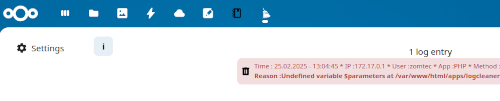
This app is similar to the nextcloud's built in logreader but with some additional features for the instance administration |
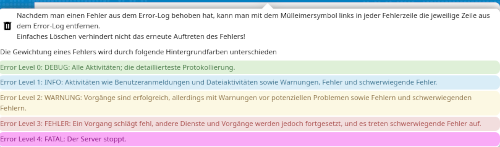
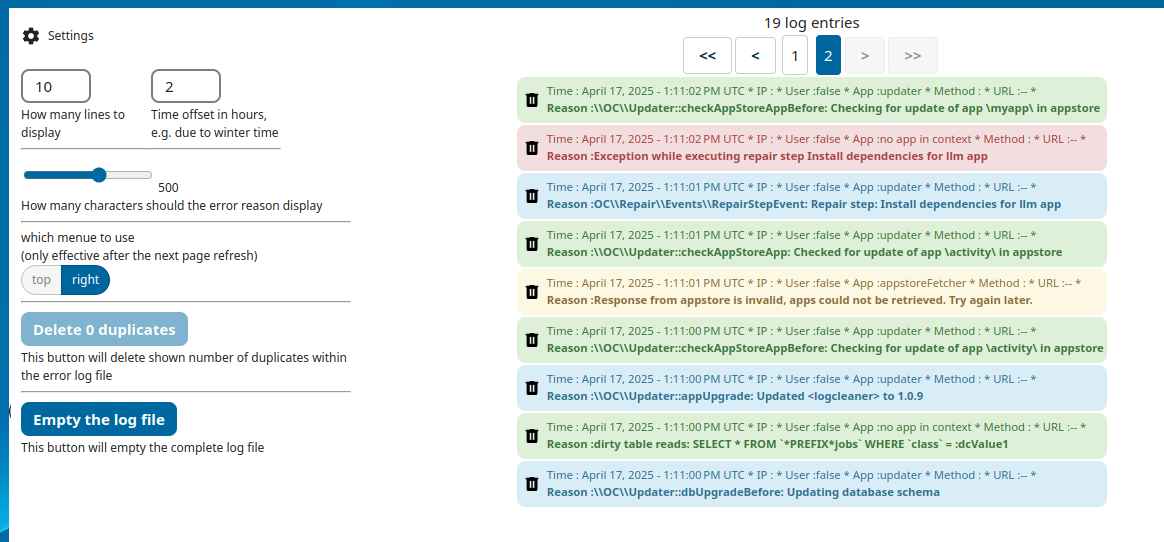
| 🛡️ Only accessible for administration 🎨 Error levels with different colors. ⚙️ Number of displayed log entries can be set. 🛠️ After correcting a log entry it can be deleted from the log file. ⏩ One click deletion of all duplicates within the log file. 🗑️ Empty the log file without using shell commands. 📜 View datails of log entries. 🔍 Find solutions on the internet by various search engines. 🔔 Send notifications for new log entries. 📯 Send emails for new log entries. |
 |
There are programs or server environments that log a lot and may generate masses of log files. This is also the case with Nextcloud. Under certain circumstances, this can regularly lead to the hard drive running full, because the log file may be constantly fed with new errors.
It is not advisable to simply empty or delete the log file. The better approach is to look at the individual error entries and correct them so that they do not occur again.
That's where the LogCleaner app comes in. With LogCleaner it is possible to decide for yourself which error has to be processed or corrected or which error is irrelevant in order to inflate the log file. After correction or consideration, you can delete individual error entries from the log file with the help of LogCleaner. It doesn't matter whether the error is at the beginning, at the end or in the middle of the log file.
Furthermore LogCleaner can detect duplicates in the log file and delete them with just one click.
- It is recommended to download or install this app directly from the Nextcloud App store.
- Alternatively you can download the latest logcleaner release based on this repository.
ff you are unsure and don't know exactly how to work with LogCleaner, feel free to look here and get information.
- rakekniven for improving grammar and fixing typos
- maghog and Leffe64 for the revision of the swedish language files
- haringk for the translation of the italian language files
All of the text is in english?
Maybe your language files are missing.You might want to help translating the app to new languages or report errors in existing translations. So feel free and send me translations.
Very bad translation?
We used the AI-based Google translator to generate language files. Of course, there were limitations to the translation depending on the quality of the AI. If you'd like to help improve your language file, open an issue and report your suggestion for improvement. Thank you- 🌟 Star this repository: This is the easiest way to support LogCleaner and it costs nothing.
- ⭐ Rate and/or 💬 comment on Logcleaner in the Nextcloud AppStore
- 🪲 Report bugs: Report any bugs you find on the issue tracker.
- 📖 Translate: Help translate LogCleaner into your language, if the AI-based Google translator generated language files are poorly translated
- 📝 Contribute: Read and file or comment on an issue and ask for guidance or give advice.
Show me
Info content:
Main view with settings:
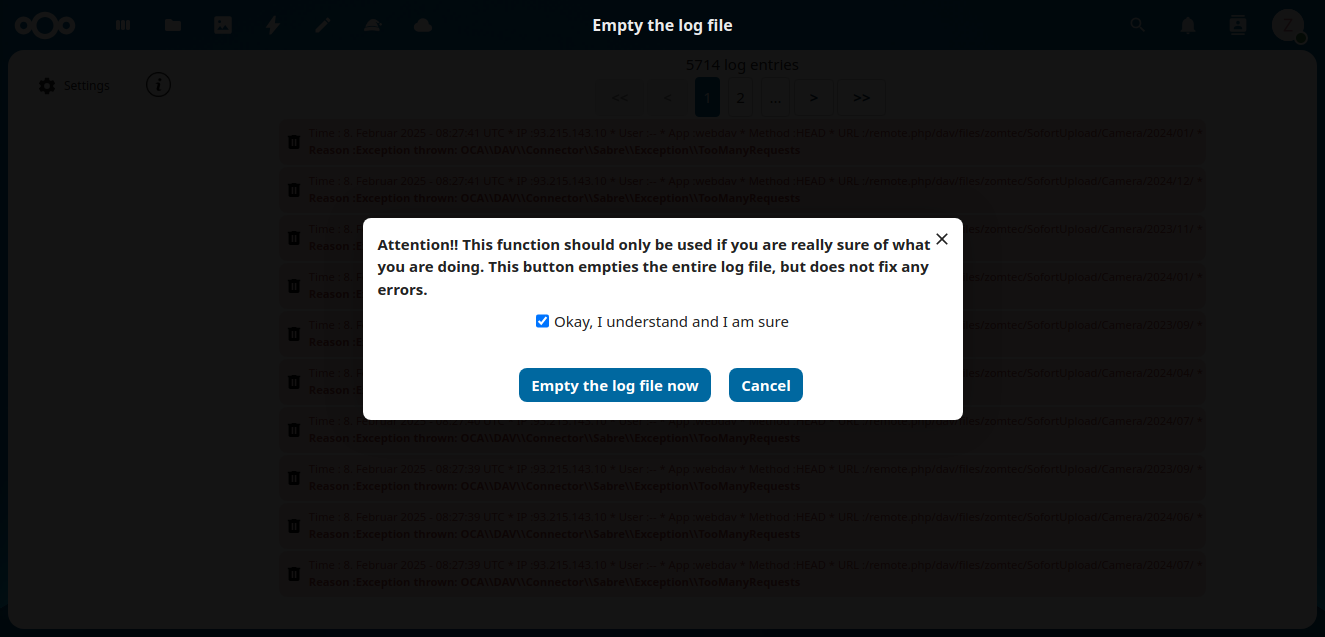
'Empty log file' button pressed:
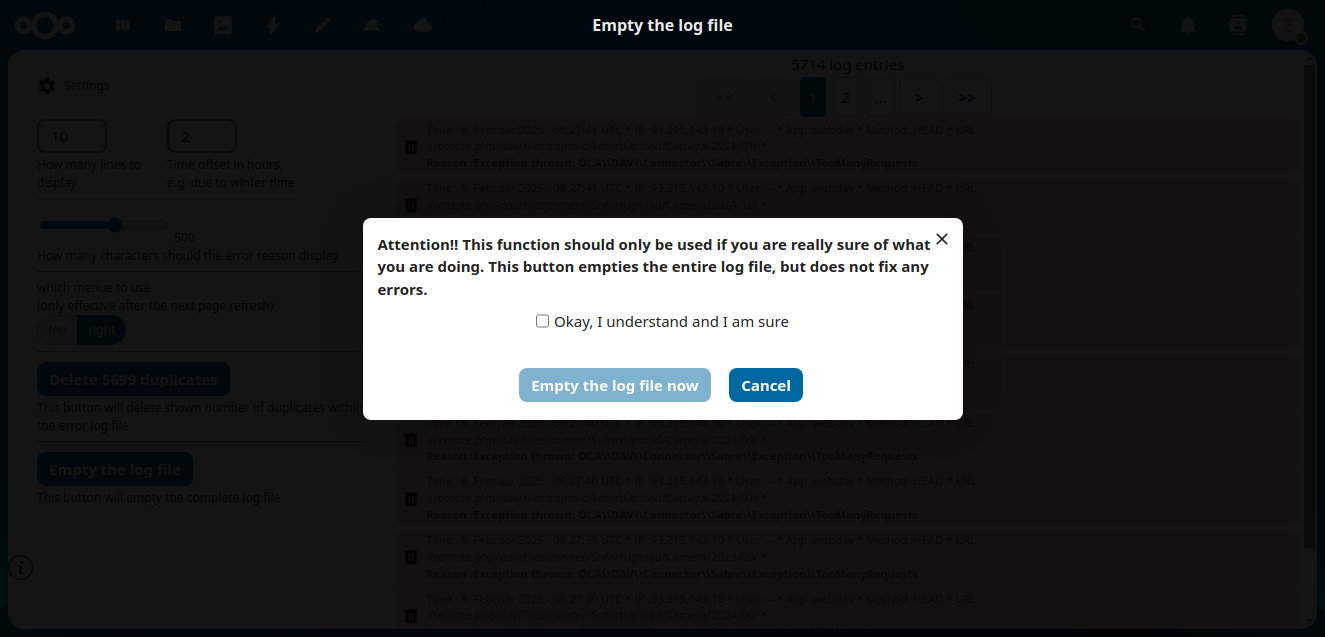
'Empty the log file now' button active after enabled check box:
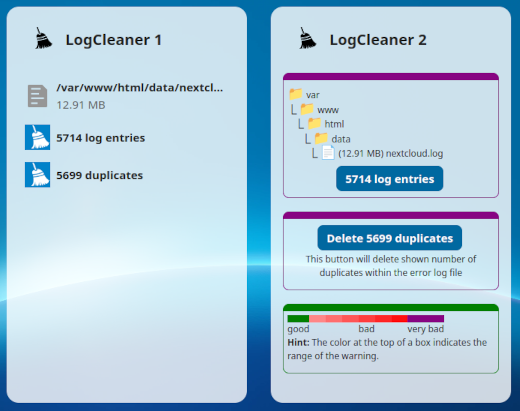
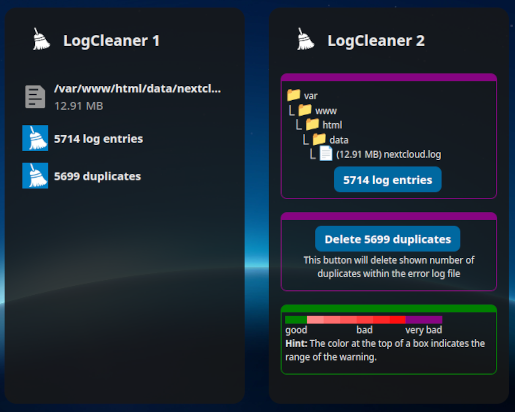
LogCleaner dashboard widgets:
New features since LogCleaner 1.2.8: View Details and search for solutions on the internet
logcleaner-searchengines.mp4
We love contributions! If you notice a missing or incorrect translation, you can easily fix it directly on GitHub without installing any specialized software.
Follow these simple steps to make your changes and send us a Pull Request (PR):
A Fork creates your own copy of this project under your GitHub account, allowing you to make changes safely.
- Scroll to the very top right of this GitHub page.
- Click the Fork button (located near the Star button).
- Click Create fork. You will now be redirected to your own copy of the repository.
- In your forked repository, navigate to the folder containing the language files (e.g.,
l10n/). - Click on the file for your language (for example,
de.jsonorlogcleaner_de.po). - Click the Pencil icon (✏️) in the top-right corner of the file view to open the editor.
- Edit or add the missing translations carefully:
- JSON files: Keep the quotes
""and commas,intact. - PO files: Add your translation inside the
msgstr ""quotes right below the matchingmsgid "".
- JSON files: Keep the quotes
Once you have made your edits:
- Click the green Commit changes... button at the top right of the editor.
- Enter a short description of what you changed (e.g.,
Fix German translation for plain text hint). - Make sure Commit directly to the
mainbranch (ormaster) is selected. - Click Commit changes.
Now send your changes back to us so we can review and include them in the official release!
- Go back to the main page of your forked repository.
- You should see a banner at the top showing your branch is ahead. Click Contribute, then click Open pull request. (If you don't see the banner, click the Pull requests tab, then the green New pull request button).
- Double-check your changes on the comparison screen.
- Click Create pull request.
- Add a brief title and description, then click Create pull request once more to finalize.
🎉 That's it! Thank you for helping improve the project. We will review your contribution as soon as possible and merge it into the main repository.